


White Ink in DTF Printing: Quality Control and Comparison of “No Sediment” vs. Standard White
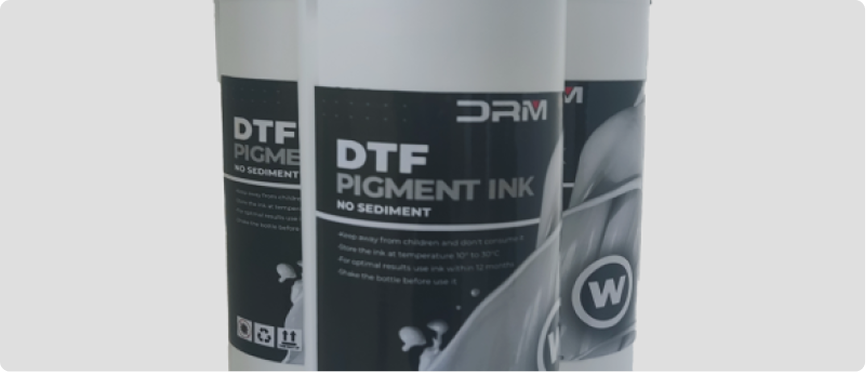
In DTF printing (Direct-to-Film), white ink is crucial. It acts as a base for all other colors, ensuring prints are vibrant, high-contrast, and durable – regardless of the textile’s color or type. That is why quality control of white ink is one of the most important steps towards achieving a professional result.
Why is white DTF ink so sensitive?
White DTF ink contains a high concentration of pigments, which ensure good opacity and strong contrast. However, this “heavier” pigment composition can cause problems if the ink is not properly formulated or handled incorrectly:
- Sedimentation – pigment settles at the bottom of the bottle over time, leading to uneven consistency.
- Nozzle clogging – the print head can become clogged if pigments are not evenly suspended.
- Uneven application – the white layer is not completely opaque, which reduces the sharpness and quality of the print.
Therefore, manufacturers and users perform regular quality checks: verifying ink density, pigment stability, test prints, and comparisons between batches.
Types of white DTF ink (based on sedimentation)
1) Standard white DTF ink
With standard white ink, pigments naturally settle to the bottom over time. This is a normal process, so it is usually necessary to:
- regularly shake or mix the bottle,
- use a mixer in the reservoir if needed,
- more frequent cleaning of nozzles, capping station, and maintenance parts.
Who is it for?
Standard white is a great choice for anyone with I3200 printheads who prints daily. With daily printing, the ink constantly “moves” through the system, so settling is less problematic, and it is usually the most cost-effective option.
2) LOW sediment white DTF ink (low sedimentation)
LOW sediment white ink is formulated so that pigments settle significantly slower and remain evenly distributed for longer periods. In practice, this means:
- less pronounced pigment settling and more stable consistency,
- more repeatable prints (less fluctuation in the white base),
- lower risk of nozzle clogging,
- less need for constant mixing (although regular mixing is still recommended).
Who is it for?
LOW sediment is ideal for those who print approximately once a week and want reliable white without too much maintenance between breaks.
3) NO sediment white DTF ink (no sedimentation)
NO sediment white ink is designed for maximum stability – the goal is for pigments not to settle (or to settle minimally and very slowly), even during longer work interruptions. Advantages:
- the most uniform consistency over time,
- the most stable white base and repeatability,
- the lowest risk of nozzle clogging and work interruptions,
- an excellent choice for users who do not print regularly.
Who is it for?
NO sediment is the best choice for those who print very little and have printers with printheads that are more sensitive to settling and blockages, such as: XP600, I1600 (our DTF Silver 42cm), I1390.
Related Articles
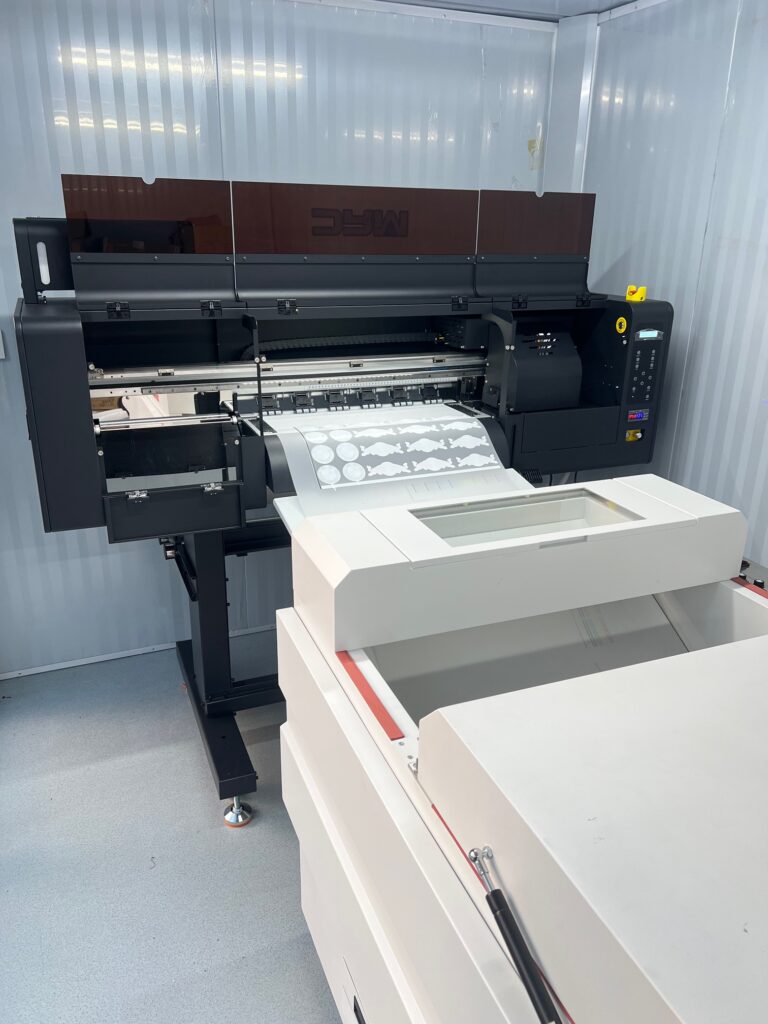
Successful installation of a DTF printer in Carinthia (near Slovenj Gradec) Over the past few days, we successfully completed the installation and commissioning of a DTF printer for a client in the Carinthia region, near Slovenj Gradec. The project included the complete system setup, calibration, and a test run, ensuring the printer is immediately ready…
READ MORE

Proper washing and handling conditions for fabrics printed with DTF technology will ensure longer print durability. All fabrics printed using DTF technology require gentle handling when it comes to washing, drying, and ironing.
READ MORE
A Comprehensive Guide to UV DTF Transfers: Everything You Need to Know Table of Contents What are UV DTF Cup Transfers? Detailed Process Description: How are UV DTF Cup Transfers Applied? Are UV DTF…
READ MORE